
In high-risk energy environments—offshore platforms, LNG facilities, refineries, and petrochemical plants—passive fire protection (PFP) is a life-safety system, not an optional upgrade. But not all fires behave the same way, and not all PFP systems protect against every fire scenario. The two most critical fire types addressed in PFP design are jet fires and hydrocarbon pool fires. While often confused, these hazards have very different characteristics and demand different performance criteria.
A well-written PFP specification must clearly distinguish between them—otherwise you risk under-protection, non-compliance, and catastrophic failure during a real event.
Understanding the Two Major Fire Types
1. Hydrocarbon Pool Fire
A hydrocarbon pool fire occurs when flammable liquid (crude, condensate, diesel, etc.) spills and ignites, creating a stable burning surface. These fires feature:
- Steady heat flux (~150–200 kW/m²)
- Wide radiant heat exposure
- Long-duration burning
- High temperatures up to 1100°C
- Slower escalation compared to jet fires
Pool fire PFP is typically tested to UL 1709, a standard that simulates rapid temperature rise and sustained high temperature. This scenario is common in refineries, LNG terminals, loading areas, tank farms, and process units.

2. Jet Fire
Jet fires result from the ignition of pressurized hydrocarbons escaping through a leak or rupture—gas or liquid. They are far more aggressive than pool fires. Key characteristics:
- Extremely high heat flux (200–350+ kW/m²)
- Directional flame impingement
- Very high erosive force
- Temperatures exceeding 1200°C
- Rapid structural weakening
Jet fires escalate in seconds, which is why they are one of the most dangerous hazards offshore.
Jet fire PFP is typically validated to:
- ISO 22899-1 Jet Fire Resistance Test
- EN 1-215 Fireproofing for Offshore Structures (regional)
Any asset handling high-pressure gas, condensate, or volatile hydrocarbons must have PFP that is explicitly jet-fire rated.
Why the Difference Matters in PFP Selection
Many coating systems that perform well in UL 1709 do not survive jet fire conditions. Jet fires introduce mechanical erosion, turbulent flame impacts, and dynamic heat flux that exceed the capability of standard epoxy PFP systems.
A PFP spec that doesn’t distinguish between fire types creates three major risks:
- False compliance – A coating may pass UL 1709 but fail in a jet fire scenario.
- Underperformance – Offshore structures or gas-handling units may collapse before evacuation.
- Regulatory issues – Offshore standards (NORSOK M-501, ISO 22899) require explicit jet-fire compliance.
What Your PFP Specification MUST Include
A robust PFP specification should address the following points clearly:
1. Defined Fire Scenario
State explicitly:
- Pool fire only (UL 1709)
- Jet fire only (ISO 22899-1)
- Combination (dual-rated)
Avoid vague phrases like “hydrocarbon fire protection” without detailing the fire type.
2. Required Fire Rating and Duration
Specify required protection time:
- 60, 90, 120, or 180 minutes
- For offshore: often 120 minutes jet fire + 120 minutes pool fire
- For onshore: typically 60–120 minutes pool fire
The time rating must correspond to emergency response and evacuation plans.
3. Certified Test Standards
A compliant spec should reference recognized international standards:
- Pool fire: UL 1709, ISO 834
- Jet fire: ISO 22899-1
- Offshore requirements: NORSOK M-501, IMO FTP Code, ISO 20340 (cyclic ageing)
Only coatings with verified third-party certification should be accepted.
4. Environmental Durability Requirements
Especially offshore, PFP must withstand:
- UV exposure
- Salt contamination
- Cyclic weathering
- Mechanical impact
- Vibration and movement
This is where ISO 20340 cyclic durability testing becomes critical before fire testing.
5. Steel Structures and Critical Items
Your spec should list all assets requiring PFP:
- Legs, braces, jackets
- Risers and pipe racks
- Vessel skirts and saddles
- Emergency shutdown valves (ESDVs)
- Compressors and critical equipment supports
High-pressure gas equipment must be jet-fire protected.
6. Minimum DFT and Application Windows
Define:
- Wet film thickness / dry film thickness
- Maximum allowable tolerances
- Temperature and humidity conditions
- Holiday testing requirements
- Curing and overcoating intervals
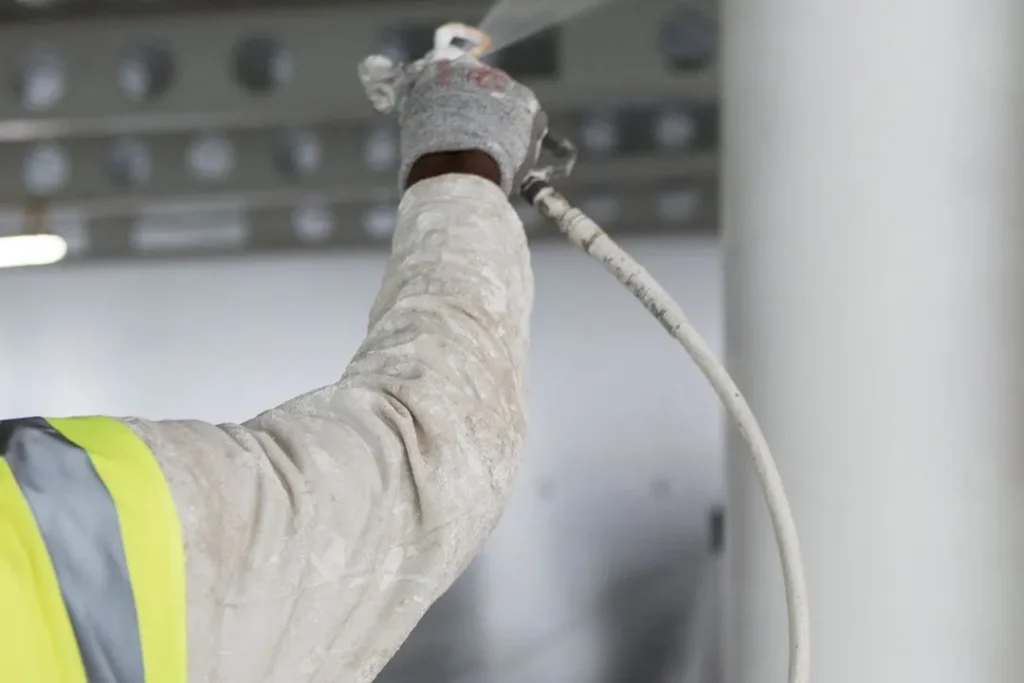
PFP failures often occur not in testing, but in application quality control.
7. Key QA/QC Requirements
Include:
- Primer compatibility
- Required seal coats
- Adhesion tests
- Density checks
- Batch traceability
- Inspection hold points
This protects the integrity of the entire system.
When to Specify Jet Fire Protection
You should specify jet-fire-rated PFP when any of these apply:
- Offshore platforms (topsides + modules)
- High-pressure gas systems
- Wellhead platforms (WHP)
- Compressors and manifolds
- Gas dehydration and separation units
- FPSOs and FLNG facilities
- LNG process and loading arms
If pressure + hydrocarbons are present → jet fire rating is mandatory.
When Pool Fire Protection Is Enough
Pool fire PFP is suitable for:
- Refineries
- Petrochemical plants
- Onshore production facilities
- Tank farms
- Loading/unloading stations
- Chemical storage areas
These areas typically handle liquid hydrocarbons with lower pressure escalation.
Conclusion
Jet fires and hydrocarbon pool fires may sound similar, but they represent very different risks—and require very different PFP performance. A high-quality specification must clearly separate the two, reference the correct standards, define duration, list applicable structures, and confirm system certifications.
A vague PFP spec can lead to under-protection, regulatory gaps, and devastating real-world consequences. A clear, detailed, and well-engineered specification ensures that the coating system will perform when it matters most—protecting life, assets, and operations.