
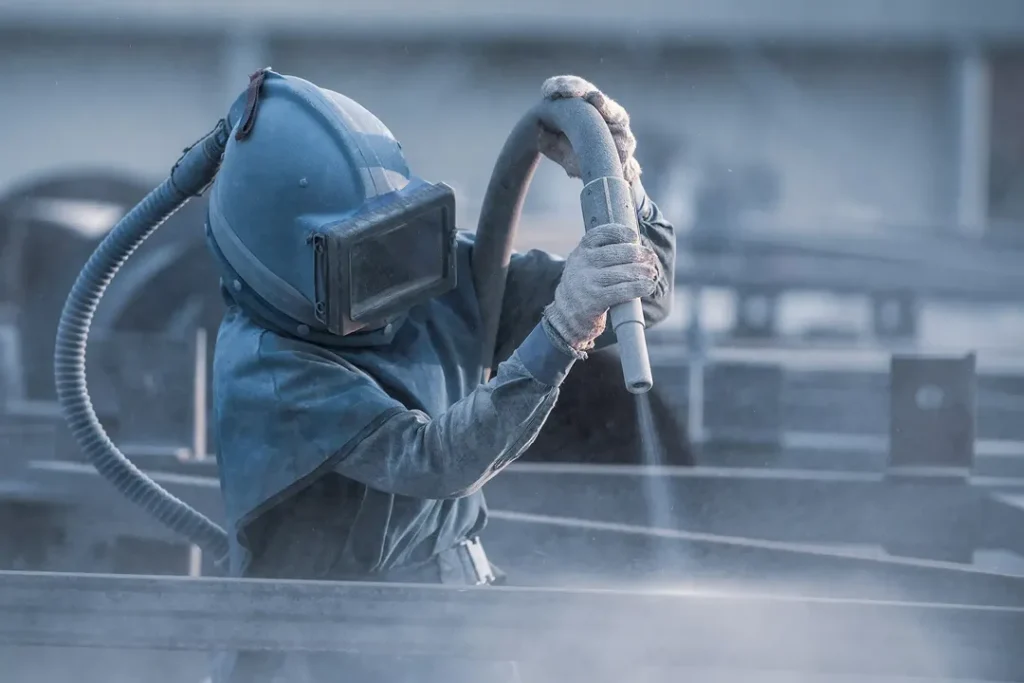
Osmotic blistering is one of the most common—and costly—failure modes in protective coating systems. It occurs when soluble salts trapped beneath or within a coating film attract moisture, creating osmotic pressure that lifts the coating from the substrate. The result is blisters filled with liquid, rapid underfilm corrosion, and premature coating breakdown. In aggressive environments such as C4, C5, offshore, and marine atmospheres, even trace amounts of salts can trigger failure, making surface cleanliness a critical factor in long-term coating performance.
Why Salts Cause Osmotic Blistering
Soluble contaminants like chlorides, sulfates, and nitrates attract water. When they remain on the steel surface during coating, they pull moisture through the coating film over time. This creates internal pressure that forms blisters and accelerates corrosion cells. Even high-performance epoxy and polyurethane systems cannot withstand prolonged exposure to trapped salts, making proper surface preparation non-negotiable.

Critical Salt Limits: What Standards Require
International standards provide clear guidelines for acceptable salt contamination levels:
- ISO 8502-6/9 (Bresle Method): Typically targets ≤ 20–50 mg/m² chloride contamination, depending on the coating specification.
- NACE/AMPP SP0508: Emphasizes testing frequency, consistent QC, and limits set according to service environment.
- Manufacturer Specifications: Many epoxy lining systems require < 5–20 mg/m² for immersion service.
The takeaway: Always follow the stricter requirement—usually the coating manufacturer’s data sheet.
Best Practice Surface Preparation to Prevent Blistering
1. Start with Proper Degreasing
Before blasting begins, remove oil, grease, and organic contaminants.
- Use approved emulsifiers or solvents
- Follow ISO 8504-1 for cleaning methods
- Rinse thoroughly to avoid residue
2. Use the Correct Abrasive
Not all abrasives provide the same cleanliness level.
- Low salt, washed garnet is preferred
- Avoid recycled abrasives that may introduce contaminants
- Ensure abrasives meet ISO 11126 requirements
3. Wet Blasting and UHP Water Jetting (Optional)
In chloride-heavy environments—marine, offshore, splash zones—high-pressure washing is essential.
- UHP (≥ 1,700 bar) removes tightly adhered salts
- Wet-blasting with rust inhibitors prevents flash rust
- Always test the surface after drying
4. Conduct Salt Testing—Every Time
Salt testing is the single most important QC step.
- Use Bresle patches or conductive measurement kits
- Test multiple spots per panel or per 10–20 m²
- Record results to ensure traceability and compliance
5. Blow Down, Clean, and Re-test
After blasting, ensure surfaces are:
- Free from dust
- Dry and visually clean (ISO 8501-1 Sa 2½ or NACE 2)
- Within the required salt limits
If readings are high—wash, dry, and re-test before proceeding.
6. Apply the Primer Immediately
Steel begins to attract contaminants and moisture the moment it is exposed.
- Apply coatings within 4 hours of blasting or as per spec
- Maintain dew point control (minimum 3°C above dew point)
- Avoid coating during high humidity or windblown contamination
Choosing the Right Coating System
Even with perfect preparation, the coating itself must tolerate service conditions. For environments with high salt exposure or immersion consider:
- Zinc-rich primers for long-term corrosion resistance
- High-build epoxies with low water permeability
- Glass flake or novolac systems for immersion
- Proper DFT to prevent holidays
Coating selection must always align with ISO 12944, manufacturer guidance, and project-specific corrosion risk.
Conclusion
Osmotic blistering is preventable—but only with disciplined surface preparation and salt control. The best coating in the world cannot perform if applied over contaminated steel. By adopting strict testing, choosing the right abrasives, ensuring proper cleaning, and maintaining environmental controls, asset owners and contractors can achieve long-term, blister-free protection—especially in harsh C5 and offshore conditions.